Big Spring Tire Sale: SAVE UP TO 25%* on select tires and wheels from quality brands.
Shop Now


Deals
New & Featured
Departments
- Automotive
- ATVs, Snowmobiles, Motorcycles Parts & Accessories
- ATVs, Snowmobiles, Motorcycles Parts & Accessories Sales
- ATVs, Snowmobiles, Motorcycles Parts & Accessories Clearance
- ATV & UTV Parts & Accessories
- Loading Ramps
- Motorcycle Parts & Accessories
- Snowmobile Parts & Accessories
- Trailers & Towing Accessories
- Audio & Electronics
- Auto Body Repair, Paints & Accessories
- Auto Lighting
- Auto Parts
- Auto Body Parts
- Brakes
- Drivetrain & Transmission
- Electrical & Wiring
- Emission & Exhaust Systems
- Engine & Ignition
- Code Readers, Diagnostic & Test Tools
- Distributors, Caps, Rotors & Parts
- Drive Belts, Tensioners & Harmonic Balancers
- Engine & Transmission
- Engine Gaskets
- Gauges & Fittings
- Glow Plugs & Components
- Ignition Coils, Resistors & Control Modules
- Ignition Wires & Sets
- Intake Manifolds
- Oil Delivery Parts
- Sensors, Switches & Relays
- Spark Plugs
- Timing Belts & Kits
- Filters & PCV Valves
- Fuel Delivery
- Heating, A/C & Engine Cooling
- Antifreeze & Coolant System Additives & Chemicals
- Cabin Air Filters
- Engine Cooling Parts
- Engine Heaters
- Heating & A/C Parts
- Heating, A/C & Engine Cooling Tools
- Refrigerants & A/C Additives
- Sensors, Switches & Relays
- Oil Delivery Parts
- Performance Parts
- Starters & Alternators
- Steering & Alignment
- Suspension Parts
- Wiper Blades & Parts
- Auto Shelters
- Auto Tools
- Auto Body Repair Tools
- Brake System Tools
- Buffers & Polishers
- Diagnostic & Testing Tools
- Drivetrain & Transmission Tools
- Electrical Tools & Kits
- Fuel System Tools
- Garage & Auto Shop Storage & Equipment
- General Service Tools
- Grease & Lubrication Tools
- Heating, A/C & Engine Cooling Tools
- Oil Change Tools & Accessories
- Portable Work Lights
- Repair Manuals
- Steering, Suspension & Alignment Tools
- Tire & Wheel Tools
- Batteries, Maintenance & Accessories
- Auto & Specialty Batteries
- Battery Booster Packs & Jump Starters
- Battery Cables & Hold Downs
- Battery Chargers
- Battery Terminals
- Battery Testers & Tools
- Booster Cables
- EV Chargers
- Power Inverters
- Car Detailing & Care Products
- Car Safety & Security
- Exterior Accessories
- Interior Accessories
- 12V Car Chargers & Plug-In Accessories
- Car Air Fresheners
- Car Safety & Security
- Car Seats
- Car Warmers
- Car Window Shades & Visors
- Car Window Tint
- Floor Mats & Liners
- Interior Car Mirrors
- Interior Car Organizers
- Interior Dress-Up Accessories
- Keychains
- Seat Covers & Cushions
- Steering Wheel Covers
- Oils, Fluids, Additives & Chemicals
- Antifreeze & Coolant System Additives & Chemicals
- Brake & Power Steering Fluids & Additives
- Diesel Fluids
- Engine Oils & Additives
- Fuel System Additives & Cleaners
- Grease, Gear Oils & Lubricants
- Oil Change Tools & Accessories
- Refrigerants & A/C Additives
- Stop Leaks
- Transmission Fluids & Additives
- Windshield Washer Fluids
- RV Parts & Accessories
- RV Electrical Accessories
- RV Exterior
- RV Fresh Water Accessories
- RV Interior
- RV Leveling & Stabilization
- RV Lighting
- RV Maintenance
- RV Plumbing & Sanitation
- Tires & Wheels
- Trailers & Towing Accessories
- Truck Accessories
- Cargo Management
- Exhaust Systems
- Exterior Truck Accessories
- Floor Mats & Liners
- Jeep Accessories
- LED Light Bars
- Light Pods & Utility Lights
- Mounts & Accessories
- Mud Flaps & Splash Guards
- Performance Air Filters
- Running Boards & Steps
- Seat Covers & Cushions
- Snow Plows, Mounts & Accessories
- Tonneau Covers
- Trailers & Towing Accessories
- ATVs, Snowmobiles, Motorcycles Parts & Accessories
- Home
- Appliances
- Hair Care
- Irons & Steamers
- Kitchen Appliances
- Blenders & Juicers
- Breadmakers
- Carbonated Water Makers & Accessories
- Coffee Grinders
- Coffee Makers
- Coffee, Espresso & Tea
- Cookers
- Espresso Machines & Makers
- Food Dehydrators
- Food Mixers & Accessories
- Food Processors & Choppers
- Fryers
- Hot Plates & Food Warmers
- Ice Makers
- Indoor Grilling
- Kettles
- Meat Grinders & Slicers
- Microwaves
- Popcorn Makers
- Toasters
- Waffle Makers
- Portable Dishwashers & Replacement Parts
- Range Hoods & Accessories
- Refrigerators & Beverage Coolers
- Sewing Machines
- Shavers, Trimmers & Hair Removal
- Vacuum Cleaners
- Water Coolers
- Bath
- Bath Mats & Rugs
- Bathroom Accessories
- Bathroom Exhaust Fans & Accessories
- Bathroom Hardware
- Bathroom Sinks & Faucets
- Bathroom Storage & Organization
- Bathroom Vanities
- Bathtubs, Showers & Accessories
- Hand & Bath Towels
- Toilets & Accessories
- Vanity Lights
- Beauty, Health & Wellness
- Bath, Body & Skin Care
- Fitness & Exercise
- Fitness & Training Recovery
- Hair Care
- Health Care Devices & Accessibility Equipment
- Heating, Cooling & Air Quality
- Oral Care
- Protective Face Masks & Coverings
- Shavers, Trimmers & Hair Removal
- Spa, Massage & Aromatherapy
- Sun Protection
- Heating, Cooling & Air Quality
- Home Decor
- Home Electronics
- Audio Devices
- Camera & Camcorder Accessories
- Cell Phone Accessories
- Computer Accessories
- Extension Cords
- Flashlights, Lanterns & Headlamps
- Home Electronics Accessories & Supplies
- Home Phones & Two Way Radios
- Household Batteries
- PC Gaming
- Power Bars & Surge Protectors
- Smart & GPS Watches
- Tablets & Tablet Accessories
- TV Stands & Media Units
- TV, Video & Home Theater
- Home Furniture
- Baby Furniture
- Bedroom Furniture
- Entryway Furniture
- Games Room
- Kitchen & Dining Room Furniture
- Living Room Furniture
- Office Furniture
- Patio Furniture & Décor
- Rugs & Flooring
- Storage Furniture
- Toddler & Kids Furniture
- Window Treatments
- Home Safety & Security
- Household & Cleaning Supplies
- Air Fresheners
- Cleaners
- Cleaning Tools
- Dish Cleaning
- Drain Cleaners
- Floor Cleaning
- Garbage Cans & Bags
- Laundry Supplies
- Paper Products
- Plungers
- Vacuum Cleaners
- Kitchenware
- Bakeware
- Coffee, Espresso & Tea
- Cookware
- Dining & Entertaining
- Food Storage
- Kitchen Appliances
- Blenders & Juicers
- Breadmakers
- Carbonated Water Makers & Accessories
- Coffee Grinders
- Coffee Makers
- Coffee, Espresso & Tea
- Cookers
- Espresso Machines & Makers
- Food Dehydrators
- Food Mixers & Accessories
- Food Processors & Choppers
- Fryers
- Hot Plates & Food Warmers
- Ice Makers
- Indoor Grilling
- Kettles
- Meat Grinders & Slicers
- Microwaves
- Popcorn Makers
- Toasters
- Waffle Makers
- Kitchen Linens
- Kitchen Storage & Organization
- Kitchen Tools & Gadgets
- Knives & Cutting Accessories
- Portable Drinkware
- Lighting
- Moving Supplies
- Office & School Supplies
- Paints & Stains
- Party City
- Bakeware
- Balloons & Accessories
- Birthday Invitations & Valentine's Day Cards
- Gift Wrapping Supplies
- Household & Cleaning Supplies
- Party Decorations
- Party Favours
- Arts & Crafts Supplies
- Bags
- Bubbles & Bubble Toys
- Cups, Containers & Treat Boxes
- Favour Ties, Tags & Charms
- Giveaway Toys
- Glow Sticks
- Jewelry
- Party & Birthday Hats
- Party Favour Gift Sets
- Pins, Buttons & Patches
- Stationery
- Stickers
- Temporary Tattoos
- Trophies & Ribbons
- Wands
- Water Balloons
- Water Blasters & Soakers
- Whistle & Noisemakers
- Tableware
- Toys & Games
- Action Figures
- Arts & Crafts Supplies
- Board Games & Puzzles
- Building Sets & Blocks
- Card Games
- Collectibles
- Dolls & Playsets
- Games Room
- Kids Electronics
- Pretend Play
- Remote Control Vehicles
- Science & Educational Toys
- Stuffed & Plush Animals
- Toddler & Preschool Toys
- Toy Blasters
- Toy Cars, Trains & Race Tracks
- Toy Storage
- Sinks, Faucets & Fixtures
- Bathroom Sinks & Faucets
- Bathroom Vanities
- Bathtubs, Showers & Accessories
- Kitchen Sinks & Faucets
- Laundry Tubs & Faucets
- Shower Wall Panels
- Showerheads & Hand Showers
- Toilets & Accessories
- Smart Home
- Snacks & Beverages
- Storage & Organization
- Baskets
- Bathroom Storage & Organization
- Closet Storage & Organization
- Garage Organization & Tool Storage
- Garage Door Openers & Hardware
- Garage Stools
- Garage Storage Cabinets
- Garage Storage Shelves & Racks
- Garage Wall & Ceiling Organization
- Plastic Storage Containers & Totes
- Portable Work Lights
- Tool Bags, Boxes & Organizers
- Tool Belts & Aprons
- Tool Chests, Cabinets & Accessories
- Tool Pouches & Holders
- Utility & Tool Carts
- Workbenches & Workstands
- Hanging Hooks
- Kitchen Storage & Organization
- Laundry Storage & Organization
- Shelving & Racks
- Shoe Racks & Storage
- Shopping Carts & Bags
- Storage Bins
- Storage Drawers & Carts
- Storage Furniture
- Toy Storage
- Vacuum Storage Bags
- Appliances
- Outdoor Living
- Backyard Pools & Supplies
- Christmas
- Christmas Candies & Gift Sets
- Christmas Decorations & Ornaments
- Christmas Entertaining
- Christmas Lights
- Christmas Icicle Lights
- Christmas Inflatables
- Christmas Lawn Décor
- Christmas Light Clips & Accessories
- Christmas Light Projectors
- Christmas Lit Signs & Lanterns
- Christmas Net Lights
- Christmas Pathway Lights
- Christmas Rope Lights
- Christmas Solar Lights
- Christmas String Lights
- Replacement Christmas Bulbs
- Smart Christmas Lights & Decor
- Christmas Stockings & Accessories
- Christmas Storage
- Christmas Trees & Accessories
- Christmas Wreaths & Garlands
- Festive Pets
- Gift Wrapping & Accessories
- Indoor Christmas Décor
- Outdoor Christmas Décor
- Pyjamas & Robes
- Gazebos, Pergolas & Canopies
- Generators & Accessories
- Lawn & Garden
- Mosquito, Insect & Pest Control
- Outdoor Cooking & BBQs
- Outdoor Dining & Entertaining
- Outdoor Heating
- Outdoor Lighting
- Outdoor Power Equipment
- Chainsaws
- Grass Trimmers
- Hedge Trimmers
- Lawn & Garden Batteries
- Lawn Mowers
- Lawn Tractors, Riding Mowers & Attachments
- Leaf Blowers & Accessories
- Log Splitters, Wood Chippers & Shredders
- Outdoor Power Tool Accessories
- Pressure Washers, Parts & Accessories
- Snowblowers
- Tillers & Cultivators
- Outdoor Recreation
- Outdoor Storage
- Patio Furniture & Décor
- Snow Removal Equipment & Tools
- Solar Power Systems
- Tools & Hardware
- Air Tools & Compressors
- Electrical
- Conduits & Fittings
- Cord Covers & Cable Organizers
- Dimmers, Switches & Timers
- Electrical Boxes
- Electrical Motor Parts
- Electrical Plugs, Connectors & Adapters
- Electrical Tools & Accessories
- Extension Cords
- Fuses, Breakers & Panel Boxes
- Household Batteries
- Power Bars & Surge Protectors
- Wall Plates & Outlet Covers
- Wall Receptacles
- Weatherproof Electrical Fittings
- Wiring & Cables
- Exterior Repair & Maintenance Supplies
- Garage Organization & Tool Storage
- Garage Door Openers & Hardware
- Garage Stools
- Garage Storage Cabinets
- Garage Storage Shelves & Racks
- Garage Wall & Ceiling Organization
- Plastic Storage Containers & Totes
- Portable Work Lights
- Tool Bags, Boxes & Organizers
- Tool Belts & Aprons
- Tool Chests, Cabinets & Accessories
- Tool Pouches & Holders
- Utility & Tool Carts
- Workbenches & Workstands
- Hand Tools
- Hardware
- Ladders & Scaffolding
- Paints & Stains
- Plumbing
- Power Tool Accessories
- Power Tools
- Buffers & Polishers
- Combo Kits
- Drill Presses & Lathes
- Drills & Accessories
- Grinders
- Heat Guns
- Impact Drivers
- Impact Wrenches
- Nailers & Staplers
- Oscillating Tools
- Planers & Joiners
- Power Tool Accessories
- Rotary Tools
- Routers
- Sanders
- Saws
- Specialty Power Tools
- Shop Vacuums
- Sinks, Faucets & Fixtures
- Bathroom Sinks & Faucets
- Bathroom Vanities
- Bathtubs, Showers & Accessories
- Kitchen Sinks & Faucets
- Laundry Tubs & Faucets
- Shower Wall Panels
- Showerheads & Hand Showers
- Toilets & Accessories
- Welding & Soldering Tools
- Work Wear & Safety Gear
- Sports & Recreation
- Bikes & Accessories
- Camping & Hiking
- Camp Stoves & Cooking
- Camping & Hiking Backpacks
- Camping Accessories
- Camping Electronics
- Camping Furniture
- Camping Lanterns & Lights
- Camping Mattresses
- Coolers & Ice Packs
- Hunting Knives
- Mosquito, Insect & Pest Control
- Portable Outdoor Heaters
- Sleeping Bags
- Sun Protection
- Survival Accessories
- Tents & Shelters
- Trekking Poles & Hiking Sticks
- Clothing, Shoes & Accessories
- Clothing
- Fan Zone
- Hats, Gloves & Accessories
- Hunting Clothes & Apparel
- Mosquito & Bug Net Gear
- Pyjamas & Robes
- Rain Gear
- Shoes & Boots
- Snowmobile Riding Gear
- Wetsuits & Water Shoes
- Winter Apparel
- Work Wear & Safety Gear
- Fishing
- Fitness & Exercise
- Games Room
- Golf & Precision Sports
- Hunting
- Luggage & Suitcases
- Outdoor Recreation
- Racquet Sports
- Team Sports
- Baseball & Softball
- Basketball
- Cricket
- Curling
- Fan Zone
- Football
- Hockey
- Lacrosse
- Soccer
- Volleyball
- Water Sports & Boating
- Boating & Marine
- Canoe & Kayak Accessories
- Canoe, Kayak & Stand Up Paddle Board Carriers
- Kayaks & Canoes
- Life Jackets/PFDs
- Paddles, Oars & Accessories
- Stand Up Paddle Boards & Accessories
- Sun Protection
- Swimming
- Tow Ropes & Accessories
- Towable Tubes & Accessories
- Wakeboards & Water Skis
- Water Toys & Floats
- Wetsuits & Water Shoes
- Winter Sports
- Curling
- Hockey
- Ice Skates
- Sledding
- Snow Goggles
- Snow Helmets
- Snowboards
- Snowshoeing
- Winter Apparel
- Tires & Wheels
- Kitchen & Dining
- Bakeware
- Coffee, Espresso & Tea
- Cookware
- Dining & Entertaining
- Food Storage
- Kitchen Appliances
- Blenders & Juicers
- Breadmakers
- Carbonated Water Makers & Accessories
- Coffee Grinders
- Coffee Makers
- Coffee, Espresso & Tea
- Cookers
- Espresso Machines & Makers
- Food Dehydrators
- Food Mixers & Accessories
- Food Processors & Choppers
- Fryers
- Hot Plates & Food Warmers
- Ice Makers
- Indoor Grilling
- Kettles
- Meat Grinders & Slicers
- Microwaves
- Popcorn Makers
- Toasters
- Waffle Makers
- Kitchen Linens
- Kitchen Storage & Organization
- Kitchen Tools & Gadgets
- Knives & Cutting Accessories
- Portable Drinkware
- Vacuum Cleaners
- Storage & Organization
- Baskets
- Bathroom Storage & Organization
- Closet Storage & Organization
- Garage Organization & Tool Storage
- Garage Door Openers & Hardware
- Garage Stools
- Garage Storage Cabinets
- Garage Storage Shelves & Racks
- Garage Wall & Ceiling Organization
- Plastic Storage Containers & Totes
- Portable Work Lights
- Tool Bags, Boxes & Organizers
- Tool Belts & Aprons
- Tool Chests, Cabinets & Accessories
- Tool Pouches & Holders
- Utility & Tool Carts
- Workbenches & Workstands
- Hanging Hooks
- Kitchen Storage & Organization
- Laundry Storage & Organization
- Shelving & Racks
- Shoe Racks & Storage
- Shopping Carts & Bags
- Storage Bins
- Storage Drawers & Carts
- Storage Furniture
- Toy Storage
- Vacuum Storage Bags
- Toys & Games
- Action Figures
- Arts & Crafts Supplies
- Board Games & Puzzles
- Building Sets & Blocks
- Card Games
- Collectibles
- Dolls & Playsets
- Games Room
- Kids Electronics
- Pretend Play
- Remote Control Vehicles
- Science & Educational Toys
- Stuffed & Plush Animals
- Toddler & Preschool Toys
- Toy Blasters
- Toy Cars, Trains & Race Tracks
- Toy Storage
- Luggage & Suitcases
- Clothing, Shoes & Accessories
- Clothing
- Fan Zone
- Hats, Gloves & Accessories
- Hunting Clothes & Apparel
- Mosquito & Bug Net Gear
- Pyjamas & Robes
- Rain Gear
- Shoes & Boots
- Snowmobile Riding Gear
- Wetsuits & Water Shoes
- Winter Apparel
- Work Wear & Safety Gear
- Pet Care
- Baby
- Party City
- Bakeware
- Balloons & Accessories
- Birthday Invitations & Valentine's Day Cards
- Gift Wrapping Supplies
- Household & Cleaning Supplies
- Air Fresheners
- Cleaners
- Cleaning Tools
- Dish Cleaning
- Drain Cleaners
- Floor Cleaning
- Garbage Cans & Bags
- Laundry Supplies
- Paper Products
- Plungers
- Vacuum Cleaners
- Party Decorations
- Party Favours
- Arts & Crafts Supplies
- Bags
- Bubbles & Bubble Toys
- Cups, Containers & Treat Boxes
- Favour Ties, Tags & Charms
- Giveaway Toys
- Glow Sticks
- Jewelry
- Party & Birthday Hats
- Party Favour Gift Sets
- Pins, Buttons & Patches
- Stationery
- Stickers
- Temporary Tattoos
- Trophies & Ribbons
- Wands
- Water Balloons
- Water Blasters & Soakers
- Whistle & Noisemakers
- Tableware
- Toys & Games
- Action Figures
- Arts & Crafts Supplies
- Board Games & Puzzles
- Building Sets & Blocks
- Card Games
- Collectibles
- Dolls & Playsets
- Games Room
- Kids Electronics
- Pretend Play
- Remote Control Vehicles
- Science & Educational Toys
- Stuffed & Plush Animals
- Toddler & Preschool Toys
- Toy Blasters
- Toy Cars, Trains & Race Tracks
- Toy Storage
- Shop Canadian
- All Brands
- Sales & Clearance
- Services & Gift Cards
- Patio
- Tires
- Spring Ready
- Party City
- Book Auto Service

This paragraph should be hidden.



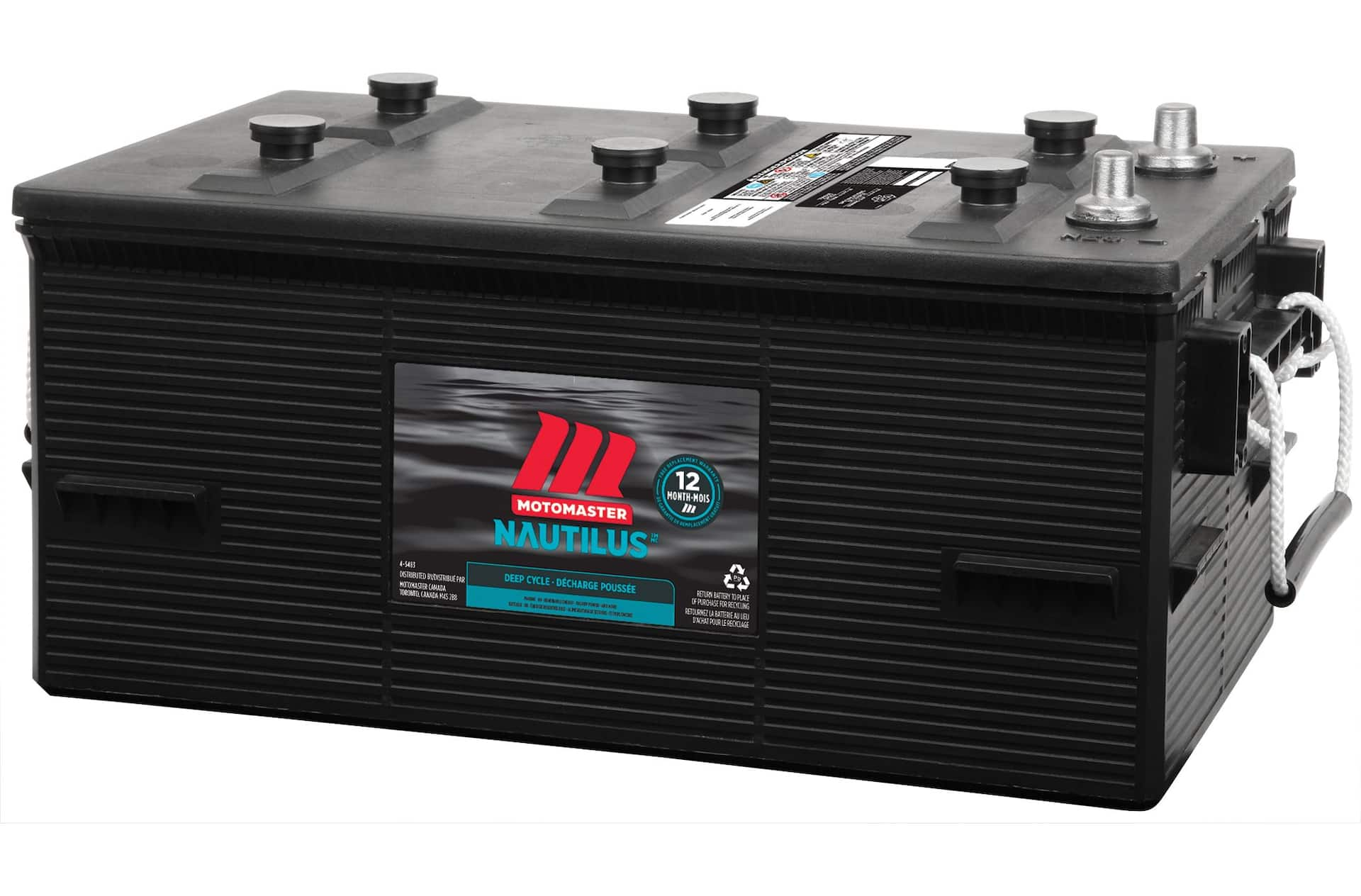
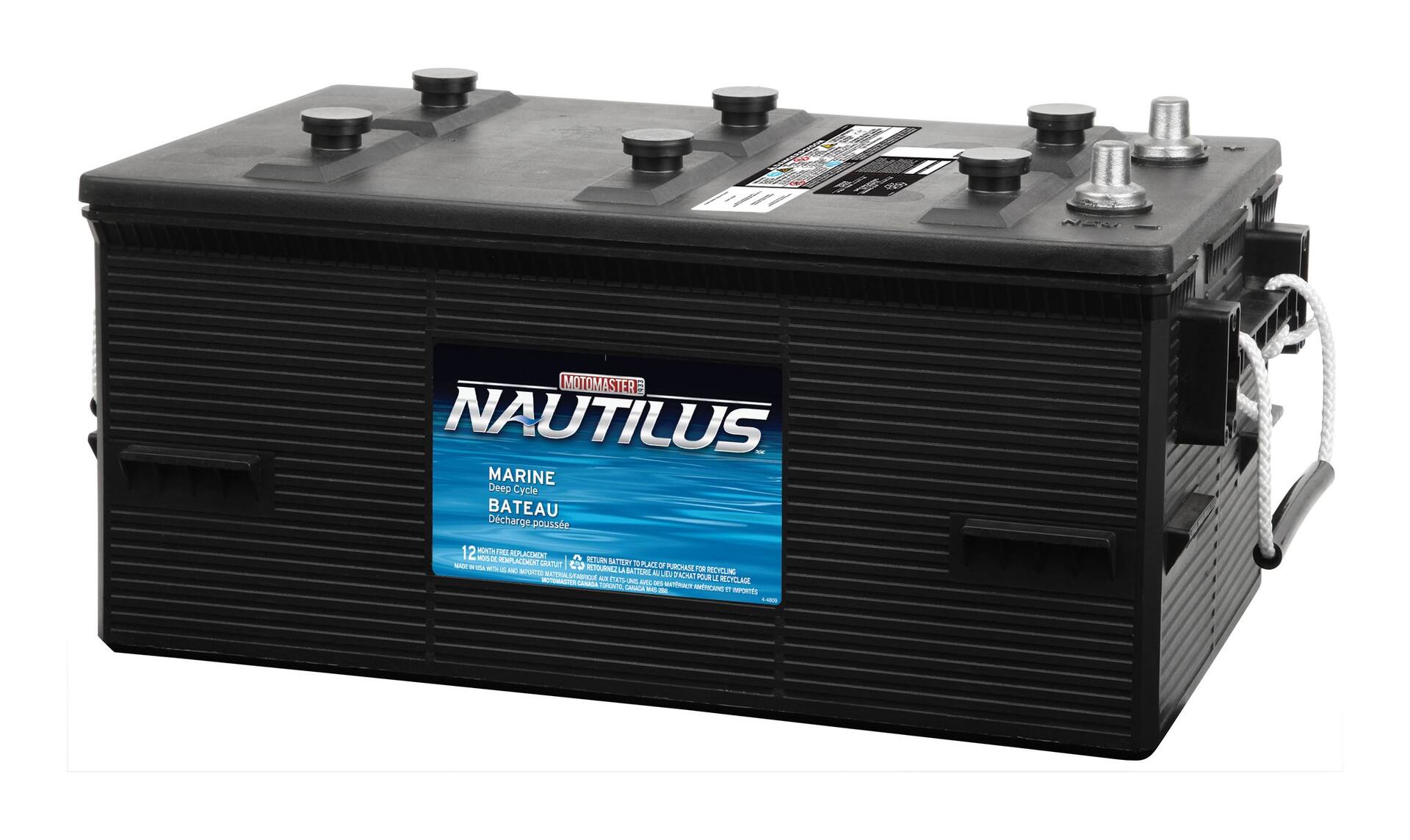
MotoMaster Nautilus
MOTOMASTER NAUTILUS Group Size 8D Battery
Unfortunately, this product is discontinued in your selected store and nearby stores.
You may be interested in these similar products shown below.Quebec residents: For information on maintenance and repair click here.
Need Installation Help?
Auto Services are available at your store
Others also viewed


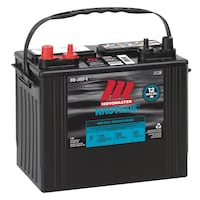
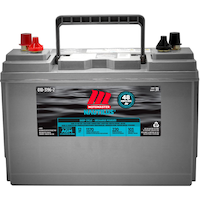
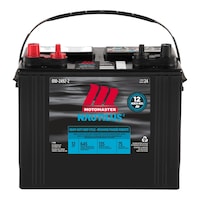
Product Details
MOTOMASTER NAUTILUS Group 8D Deep Cycle Battery is a premium deep cycle battery
Provides extended runtime for "house" accessories such as trolling motors, refrigerators and electronics
Group size: 8D
1720 marine cranking amps, 185 amp hour, 430 minutes reserve capacity
Dimensions: 20-3/4" L X 11" W X 10" H (52.5 x 28 x 25.4 cm)
Note: This product is no longer available and is replaced by 010-7332
| Part Number | NAU8DDC |
|---|---|
| Industry Group Size # | 8D |
| Battery Type | AGM (Absorbed Glass Mat) |
| Battery Use | Deep Cycling, Starting |
| Battery Voltage (Nominal) | 12 |
| Cold Cranking Amps (CCA) | 1400 A |
| Cranking Amps (CA) | 1720 A |
| Reserve Capacity (RC) | 430 min |
| Maximum Length (in) | 20.71 in |
| Maximum Width (in) | 10.96 in |
| Maximum Height (Excluding Posts) (in) | 8.72 in |
|---|---|
| Advanced Features | No Advanced Features |
| Amp Hours (10 Hour Rate) | 0.00 Ah |
| Amp Hours (20 Hour Rate) | 0.00 Ah |
| Amp Hours (5 Hour Rate) | 0.00 Ah |
| Battery Weight | 57.7 kg |
| Battery Weight (lb) | 127.2 lb |
| Common Applications | Farm Equipment, Bus, Material Handling Equipment, Marine, Heavy Duty/Commercial Truck |
| Electrolyte Level | Serviceable |
| Manufacturer Part Number | NAU8DDC |
| Marine Cranking Amps (MCA) | 1755 A |
| Maximum Height (Excluding Posts) (mm) | 222 mm |
| Maximum Height (Including Posts) (in) | 9.98 in |
| Maximum Height (Including Posts) (mm) | 254 mm |
| Maximum Length (mm) | 527 mm |
| Maximum Width (mm) | 279 mm |
| Polarity | Right Hand Positive |
| Terminal Type | Automotive Top Post |
| UN Classification | UN2794 Batteries Wet Filled With Acid |
| Venting Design | Vented |
- 1 yr exchange
Pick Up is free at most stores (some stores require a minimum order value before tax)
Shipping fee is based on size and weight of products and distance from address to store
Same-Day Delivery costs $9.99 per order
Same-Day Delivery and Ship to Home are unavailable for tires and wheels
Most products can be returned or exchanged at any Canadian Tire store within 90 days of purchase
Some products are non-refundable and non-exchangeable
Special order hard parts and specific application automotive parts must be returned to original store of purchase
The return info outlined above may not apply to the product you are currently viewing. For complete details and exceptions, please refer to our Return Policy.
Shop Related Products
- Weekly Deals
- Customers Also Viewed
- Top Trending Products
- More From This Brand
Weekly Deals

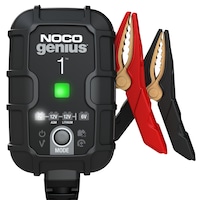



Review Highlights
Reviews
Rating Snapshot
5 starsstars
4 starsstars
3 starsstars
2 starsstars
1 starstars
Overall Rating
Review this product
Filter Reviews
- charging
- durability
- installation
- large
- powerful
- satisfaction
- size
- weight
Fast dying batteries.
No, I do not recommend this product.
Lots of power
Yes, I recommend this product.
They don't last
No, I do not recommend this product.
bonne réserve d'énergie
Yes, I recommend this product.
Questions
Q: I am adding a 2nd battery to my solar setup in my Van. I travel and sleep inside and want to be sure a group size 8D battery will not let off dangerous fumes in my vehicle.
5 years ago- A: Gassing is part of the charging process - All lead acid batteries, particularly flooded types, will produce hydrogen and oxygen gas under both normal (e.g. during use, during charging) and abnormal (e.g. overcharging) operating conditions. Even when in storage, minor amounts of gas will be produced due to the normal evaporation of water and the tendency to self-discharge. We recommend the use of a vent tube when the battery cannot be installed in an outdoor or well-ventilated area. Additionally, with your use of a solar panel, it is highly recommended to use a solar charge controller to protect against overcharging as this would increase the risk of gassing.5 years agoHelpful?
Q: Is there any instruction of how to top up the battery with water?
5 years ago- A: No, but it's a regular lead-Acid battery, so a generic instruction for lead-acid batteries should do.5 years agoHelpful?
Q: good with wind generator? I noticed with the wind generator, they recommend the 12v Eliminator renewable energy deep cycle battery at $299.99 its a sealed battery & provides 100ah at 100hr. I need help figuring out which one is best to go with.
13 years ago- A: That should be 1 amp for 100hours or 100amps for 1 hour either way it works out the same so that is 1200 watts for 1 hour or 12 watts for 100 hours but you should never uses more than 40% to 50% of the stored power in the battery before you start recharging it so that means you should have more than one battery in Parallel to give you more power to use between charges.12 years agoHelpful?
Q: Will it work with Eliminator 3000W? Will the battery work with the MotoMaster Eliminator 3,000W Power Inverter? I want to be able to use TV's, laptops continuously plugged in to the inverter. Will this work? Thank you.
13 years ago- A: Being a 12volt battery and having 200 ah 12x 200=2400watts for 1 hour of use this will drain the battery so if you add 2 battery's in Parallel you will get 12 volts 400 amphours which =4800 watts for 1 hour of use but if you use half the wattage 2400 watts it will last for 2 hours but most AC items don't use that much wattage unless it is a heater or blowdryer so the less wattage used the longer that battery will last and most battery should not be discharged past the half way mark or it will decrease the life time of the battery.12 years agoHelpful?
Q: Hi what should I set the charge parameters for the Nautilus 10-3029-2 8D battery to with solar charge controllers 48 volt battery bank.
5 years ago- A: What parameters you require depends on your charging equipment - some require fewer, some ask for more. These are the fundamental parametres: Bulk current - Ideal 25A, max 55A Bulk/Absorption Charge - 58.8V* Float - 54.0V* Equalize - 64.8V* *If possible, temperature compensation is recommended. To compensate for battery temperature not at 20°C, subtract 0.005 V/cell for each 1°C above 20°C; add 0.005 V/cell for each 1°C under 20°C.5 years agoHelpful?
Q: I have one 250W solar panel, 30A 21V Charge Controller, a 1500W inverter - is the charge controller adequate? I am only running laptops, phones, internet and charging a solar generator. No appliances. Building up a system slowly.
5 years ago- A: It's very difficult to answer your question without specific data about how much power you are actually using (removing from the battery). Granted, the devices you listed don't generally consume too much power. Your 250W solar panel generates about 13-15 amps in IDEAL conditions. That should be more than enough to keep your 185 Ah battery charged based on the loads you described - in summer. Winter becomes much more challenging because of the lack of sun. Your charge controller (which I assume you meant to say is 12V) will allow you up to 30A of capacity, so your next best move (when you're ready) is to purchase another 250W of solar panel thereby doubling your charging power. Since you've just assembled this system, pay attention to how it's performing daily. Check battery and/or the charge controller. If it's turning off/saying "Charged" then you know your solar panel is keeping up with your power you are using (draining from the battery). If not, then you'll definitely require more solar panel. BTW, whenever possible (i.e. if ever not being used, like overnight?), turn the inverter completely off. It draws probably 0.5A just sitting ON so that can save a bit of battery discharge. When living off battery power, every little bit of conversation helps. Also, some of the devices you listed may not be compatible with a Modified Sine Wave inverter (assuming this is what you bought). If you find any of your devices not charging/working or behaving oddly, to save money relative to purchasing a large Pure Sine Wave inverter, you can consider purchasing a small one (like 500W) for just the devices that don't work on your MSW inverter (if any).5 years agoHelpful?
Q: Thank you for answering my other question, it was very helpful. I should have also asked about how it works in the winter months as I intend to use it all year round. Thank you again.
5 years ago- A: The challenge you're going to have with keeping any battery outdoors in winter is that (1) batteries simply don't charge well in freezing temperatures and (2) the amount of sunlight in winter is minimal. Battery charging is a chemical process and, putting it simply, the chemical process that happens inside a lead-acid battery is severally slowed down. Compound that in your situation with the fact that you're using solar panels (as opposed to a battery charger) to charge the battery. While there's an abundance of sun in the summer, this is not the case in the winter (and/or panels get covered in snow) so your charging capability (power & time) is a fraction of what it is in the summer. A fully charged lead-acid battery won't freeze until about -67 degrees C. So you challenge is to keep it as charged as possible (i.e. minimizing discharge level and ensure some means of recharging the battery fully every day). On this front, an AGM battery does provide some benefit over flooded lead-acid in that it's charge acceptance is much better - about twice as efficient. Bottom line, if keeping batteries outdoors in Canadian winters, you'll notice less power (compared to summer) and you'll be challenged to keep the battery fully charged. If you can, installing the batteries in some sort of shelter (and ideally, temperature controlled) would be your better option.5 years agoHelpful?
Q: I just purchased this battery and an Eliminator 1500W inverter to connect to my solar panel. Can these batteries work with an inverter? Should I exchange it for an AGM or Gel battery?!
5 years ago- A: This is an excellent battery to use with an inverter. Ensure you have enough solar panel to allow it to fully charge. (Not allowing a battery to fully charge will gradually diminish it's capacity.)5 years agoHelpful?
Q: Is there any studs to bolt connections on with buts
6 years ago- A: This battery has SAE automotive posts. An 8D battery with stud/bolt connectors is not available.6 years agoHelpful?
Q: Thanks for answering my previous question so quickly, I appreciate it. Would you happen to know how to figure out the charging parameters? I can’t find them anywhere. Bulk, Absorb, and Float voltage and time? Also how low can I safely discharge w/o damag
6 years ago- A: Most people would just use a fully automatic battery charger (preferably a smart charger) and let it do it's thing - life is simpler that way. But if you're willing and able to tackle "manual" charging, we can certainly provide you with the charging parametres. There are many variables (like temperature and depth of discharge, particularly for your time question) which makes it too complex to simply write it out in sentences here, and we aren't able to post .docs or .pdfs. So please give our Customer Service a call at 1-800-387-8803 and request the charging parametres and we can email them to you. With regards to your second question about discharging, not exactly sure what you're trying to do but, aside from using potentially expensive resistors, a 12V car headlight makes a pretty inexpensive and measurable power draw.6 years agoHelpful?