



MotoMaster Nautilus
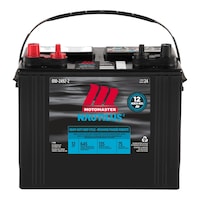
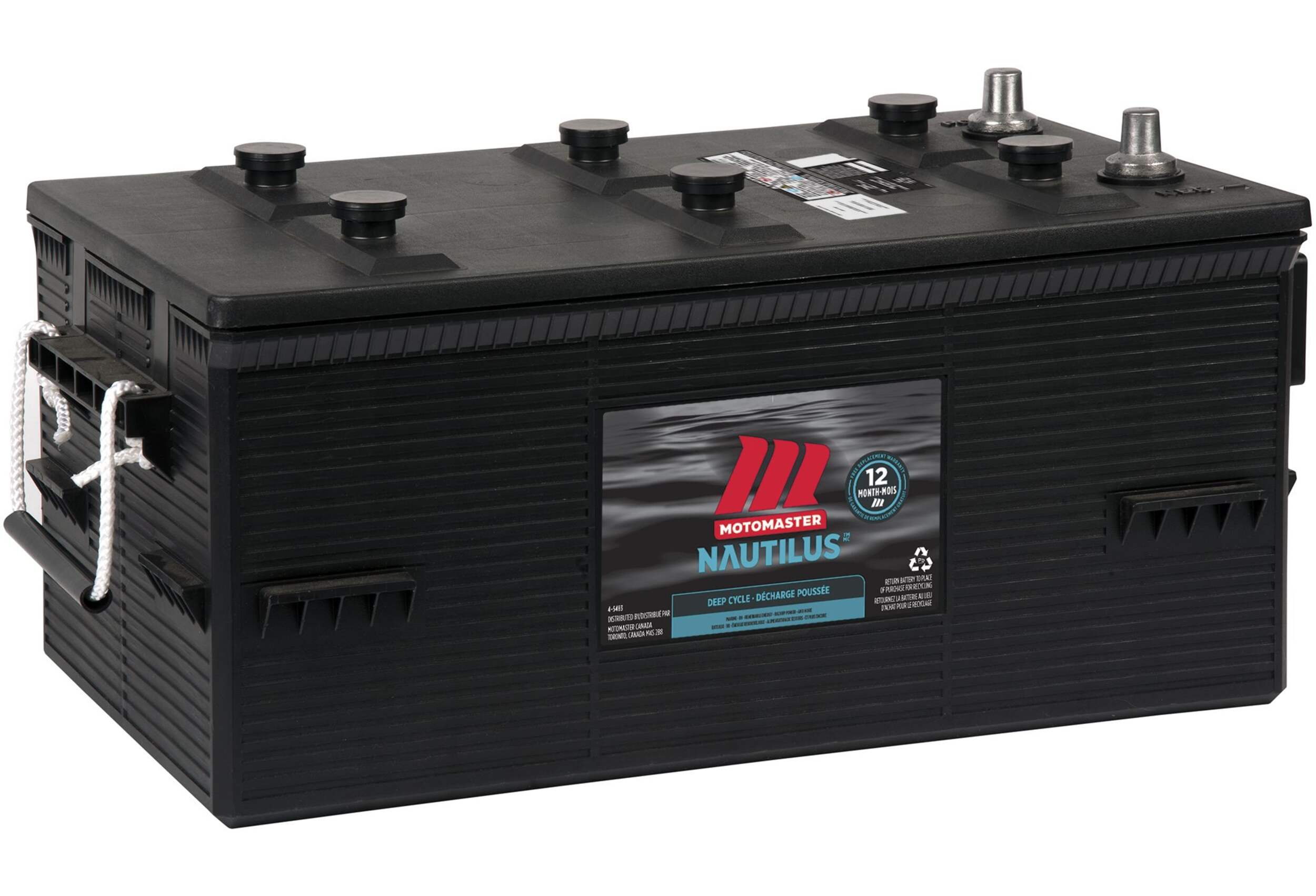
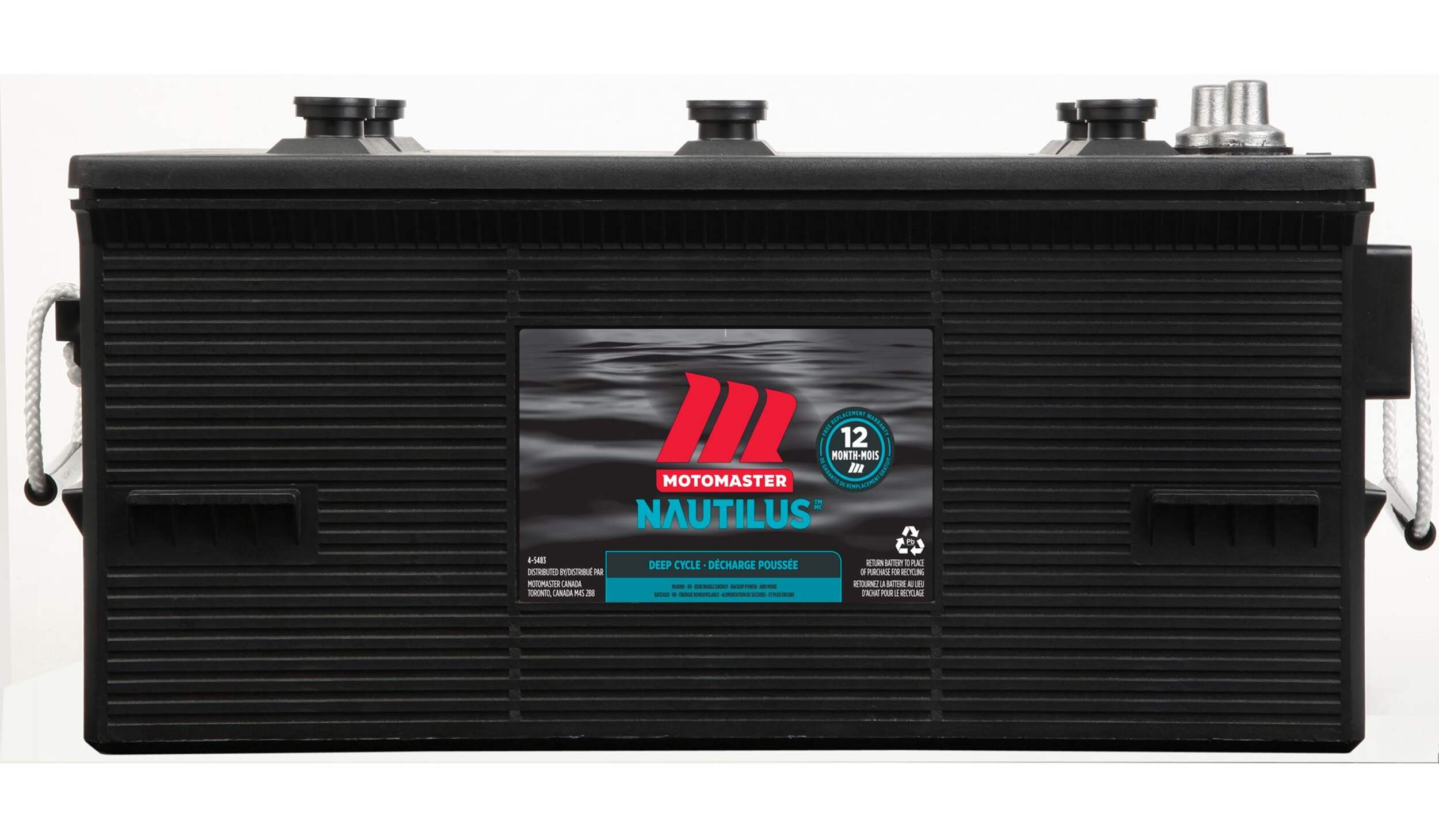
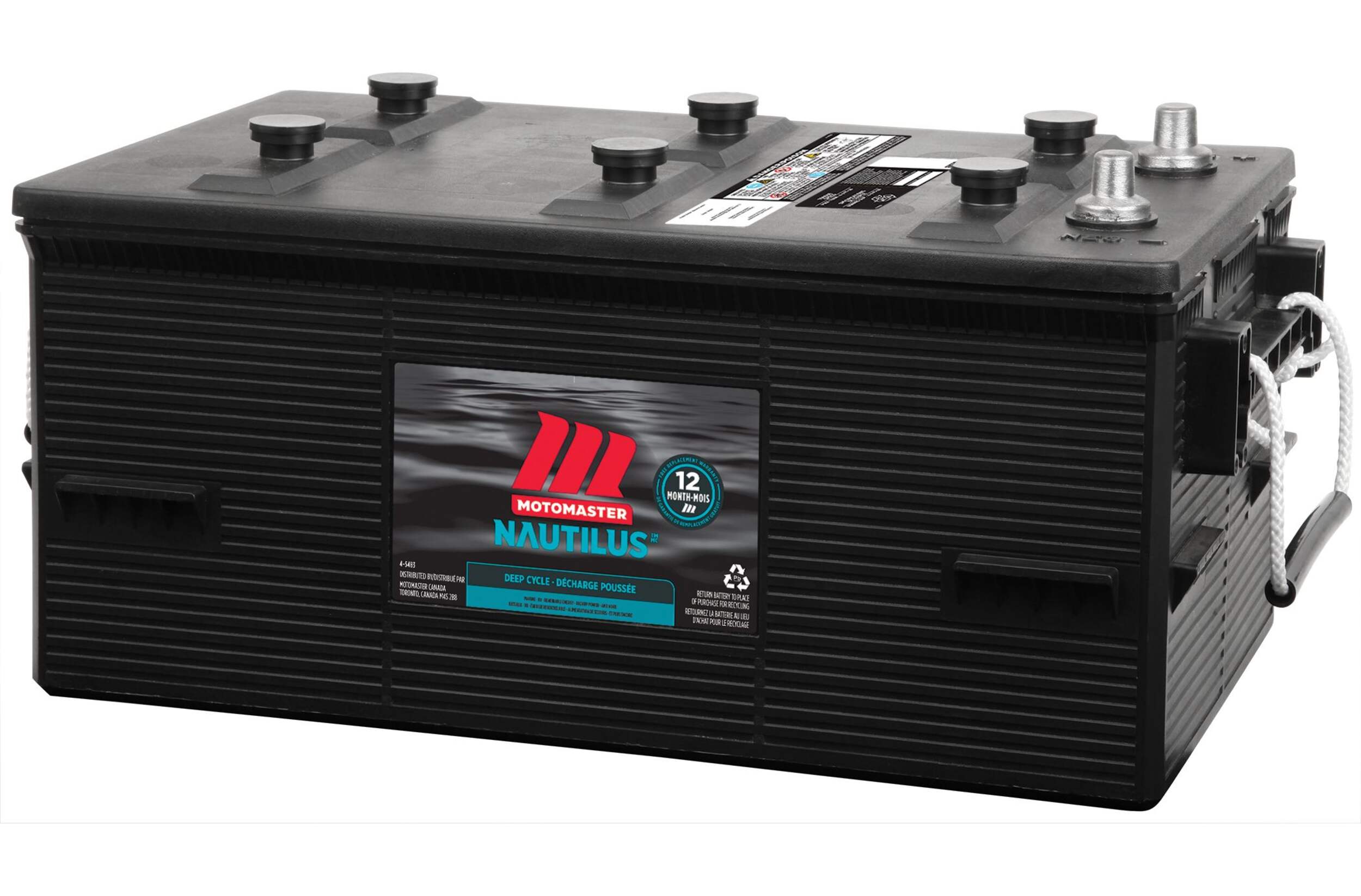
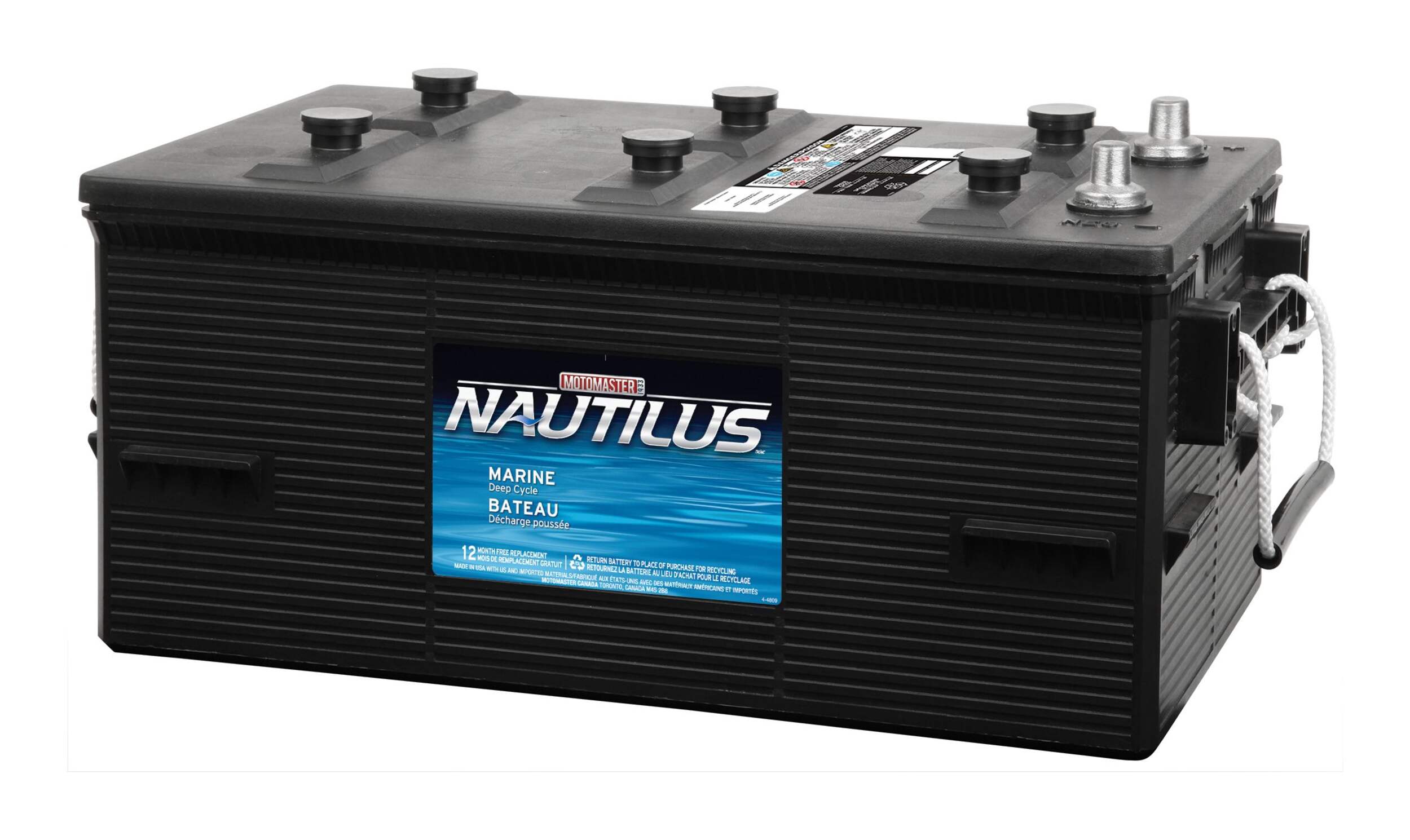
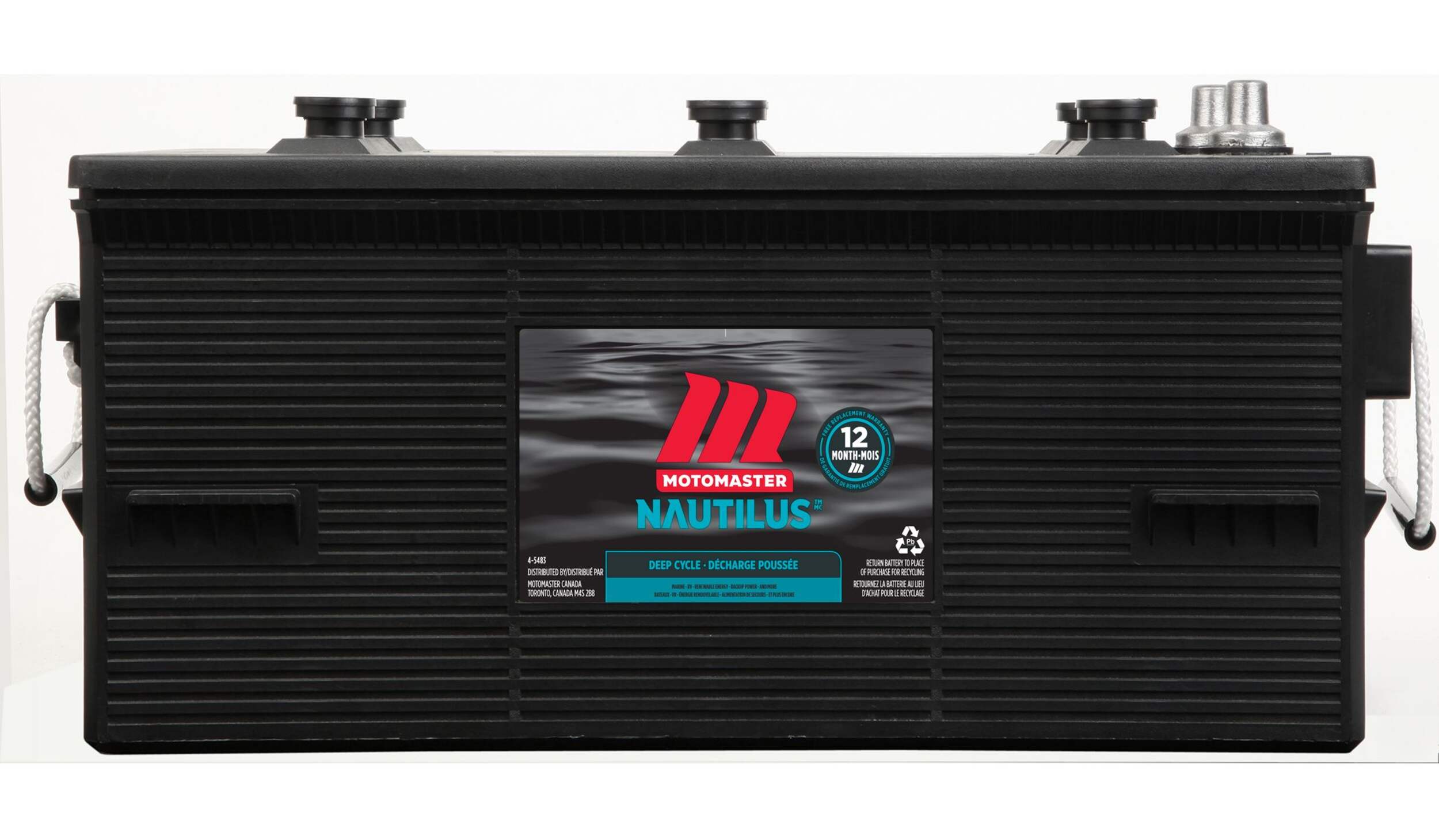
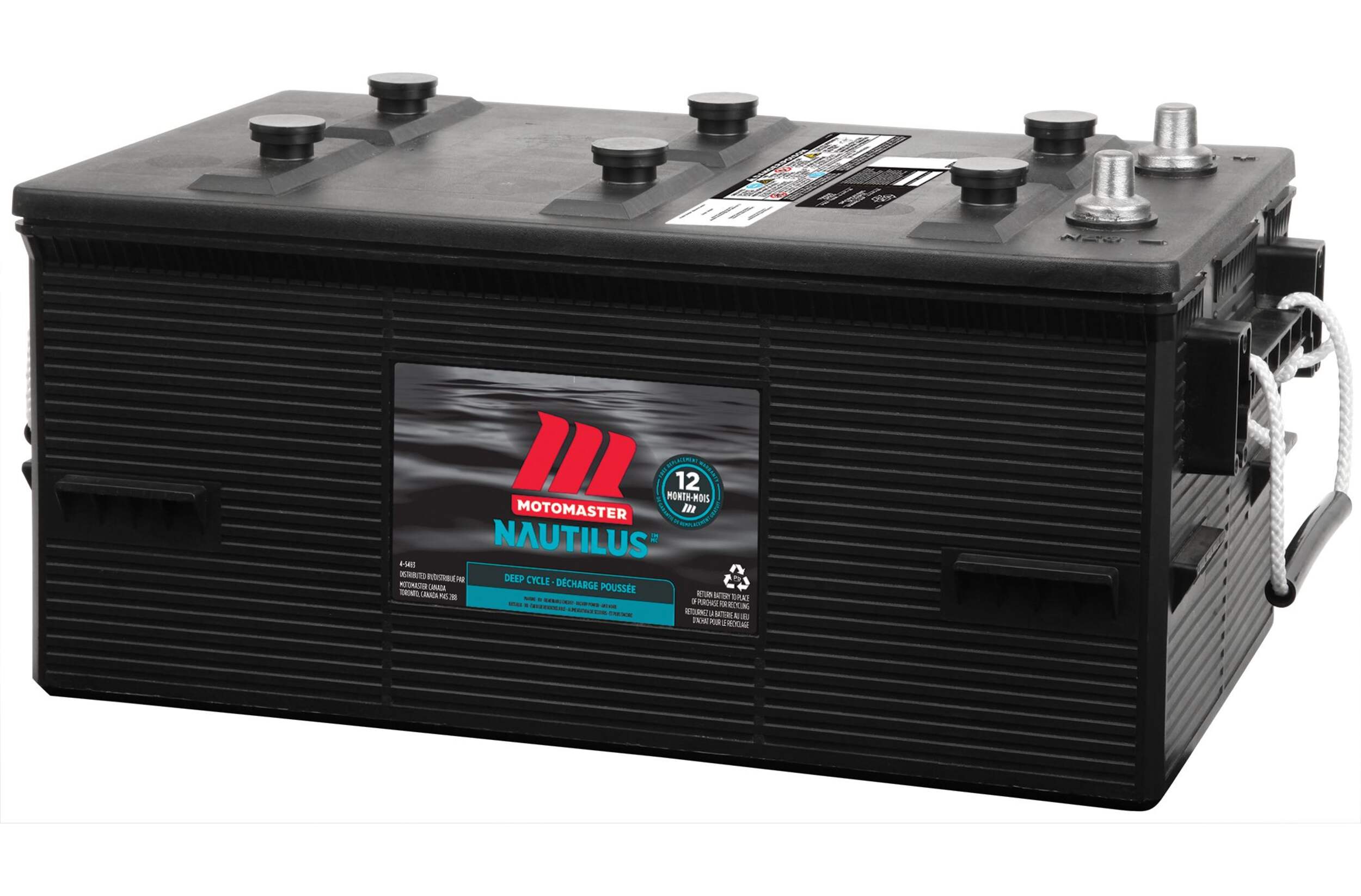
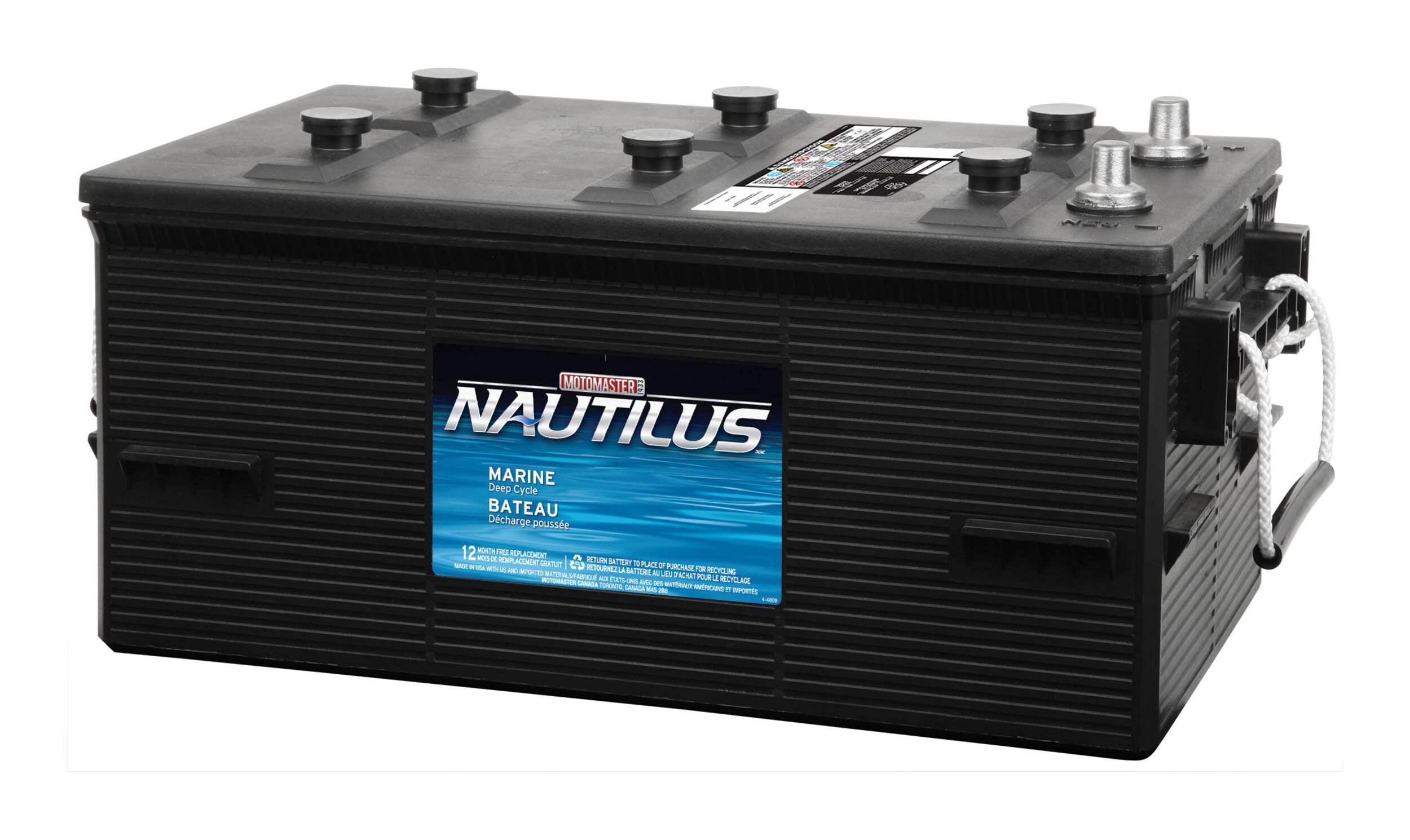
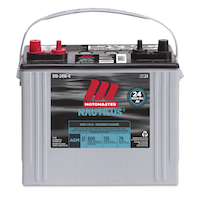
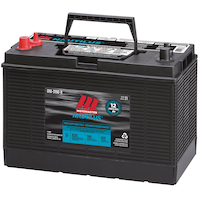
Batterie MOTOMASTER NAUTILUS, groupe 8D
Malheureusement, cet article ne fait plus partie de l’assortiment du magasin que vous avez sélectionné et les magasins de la région.
Ces produits similaires présentés ci-dessous pourraient vous intéresser.À l'attention des personnes résidant au Québec: pour obtenir des renseignements sur l'entretien et la réparation, cliquez ici.
Besoin d’aide pour l’installation?
Les services automobiles sont disponibles dans votre magasin
Objets similaires


Produit Détails
- Caractéristiques
- Spécifications
- Ressources
Batterie à décharge profonde MOTOMASTER NAUTILUS de groupe 8D de qualité supérieure
Offre une autonomie longue durée pour les accessoires « maison » comme les moteurs pour pêche à la traîne, réfrigérateurs et appareils électroniques
Numéro de groupe : 8D
Puissance de démarrage nautique de 1 720 ampères, 185 ampères-heures, capacité de réserve de 430 minutes
Dimensions : 52,5 cm L x 28 cm la x 25,4 cm H (20 3/4 x 11 x 10 po)
Remarque : Cet article n’est plus disponible et est remplacé par l’article 010-7332
| Numéro de modèle de l’article | NAU8DDC |
|---|---|
| Numéro du groupe dimensionnel de l’industrie | 8D |
| Type de pile/taille de la pile | Mat de verre absorbé |
| Utilisation de la pile | Décharge-recharge poussée, Démarrage |
| Tension de la batterie (nominale) | 12 |
| Intensité au démarrage à froid | 1400 A |
| Puissance de démarrage nautique/intensité au démarrage | 1720 A |
| Capacité de réserve | 430 min |
| Longueur maximale (po) | 20,71 po |
| Largeur maximale (po) | 10,96 po |
| Hauteur maximale (cosses exclues) (po) | 8,72 po |
|---|---|
| Ampères-heures (taux de 10 heures) | 0,00 Ah |
| Ampères-heures (taux de 20 heures) | 0,00 Ah |
| Ampères-heures (taux de 5 heures) | 0,00 Ah |
| Applications courantes | Équipement agricole, Autobus, Équipement de manutention, Nautique, Camion utilitaire/lourd |
| Classification UN | UN2794 Batteries à liquide remplies d'acide |
| Conception ventilée | Ventilé |
| Fonctionnalités avancées | Sans fonctionnalités avancées |
| Hauteur maximale (cosses exclues) (mm) | 222 mm |
| Hauteur maximale (cosses incluses) (mm) | 254 mm |
| Hauteur maximale (cosses incluses) (po) | 9,98 po |
| Intensité au démarrage (bateau) | 1755 A |
| Largeur maximale (mm) | 279 mm |
| Longueur maximale (mm) | 527 mm |
| Niveau d'électrolyte | Avec entretien |
| Numéro de pièce du fabricant | NAU8DDC |
| Poids de la batterie | 57,7 kg |
| Poids de la batterie (lb) | 127,2 lb |
| Type de borne | Borne automobile supérieure |
Garantie
1 an, échange
Acheter des produits connexes
- Offres hebdomadaires
- Les clients ont aussi consulté
- Vers les produits tendances
- Plus de cette marque
Offres hebdo



Points saillants de l'evaluation
Évaluations
Filtrer les avis
- la satisfaction
- taille
- poids
- charge
- durabilité
- puissant
- installation
- grand
Fast dying batteries.
Non, Je ne recommande pas ce produit.
Lots of power
Oui, Je recommande ce produit.
They don't last
Non, Je ne recommande pas ce produit.
bonne réserve d'énergie
Oui, Je recommande ce produit.
Questions
Q : I am adding a 2nd battery to my solar setup in my Van. I travel and sleep inside and want to be sure a group size 8D battery will not let off dangerous fumes in my vehicle.
il y a 4 ans- Traduire avec Google
R : Gassing is part of the charging process - All lead acid batteries, particularly flooded types, will produce hydrogen and oxygen gas under both normal (e.g. during use, during charging) and abnormal (e.g. overcharging) operating conditions. Even when in storage, minor amounts of gas will be produced due to the normal evaporation of water and the tendency to self-discharge. We recommend the use of a vent tube when the battery cannot be installed in an outdoor or well-ventilated area. Additionally, with your use of a solar panel, it is highly recommended to use a solar charge controller to protect against overcharging as this would increase the risk of gassing.
il y a 4 ansUtile?
Q : Is there any instruction of how to top up the battery with water?
il y a 4 ans- Traduire avec Google
R : No, but it's a regular lead-Acid battery, so a generic instruction for lead-acid batteries should do.
il y a 4 ansUtile?
Q : good with wind generator? I noticed with the wind generator, they recommend the 12v Eliminator renewable energy deep cycle battery at $299.99 its a sealed battery & provides 100ah at 100hr. I need help figuring out which one is best to go with.
il y a 13 ans- Traduire avec Google
R : That should be 1 amp for 100hours or 100amps for 1 hour either way it works out the same so that is 1200 watts for 1 hour or 12 watts for 100 hours but you should never uses more than 40% to 50% of the stored power in the battery before you start recharging it so that means you should have more than one battery in Parallel to give you more power to use between charges.
il y a 12 ansUtile?
Q : Will it work with Eliminator 3000W? Will the battery work with the MotoMaster Eliminator 3,000W Power Inverter? I want to be able to use TV's, laptops continuously plugged in to the inverter. Will this work? Thank you.
il y a 13 ans- Traduire avec Google
R : Being a 12volt battery and having 200 ah 12x 200=2400watts for 1 hour of use this will drain the battery so if you add 2 battery's in Parallel you will get 12 volts 400 amphours which =4800 watts for 1 hour of use but if you use half the wattage 2400 watts it will last for 2 hours but most AC items don't use that much wattage unless it is a heater or blowdryer so the less wattage used the longer that battery will last and most battery should not be discharged past the half way mark or it will decrease the life time of the battery.
il y a 12 ansUtile?
Q : Hi what should I set the charge parameters for the Nautilus 10-3029-2 8D battery to with solar charge controllers 48 volt battery bank.
il y a 5 ans- Traduire avec Google
R : What parameters you require depends on your charging equipment - some require fewer, some ask for more. These are the fundamental parametres: Bulk current - Ideal 25A, max 55A Bulk/Absorption Charge - 58.8V* Float - 54.0V* Equalize - 64.8V* *If possible, temperature compensation is recommended. To compensate for battery temperature not at 20°C, subtract 0.005 V/cell for each 1°C above 20°C; add 0.005 V/cell for each 1°C under 20°C.
il y a 5 ansUtile?
Q : I have one 250W solar panel, 30A 21V Charge Controller, a 1500W inverter - is the charge controller adequate? I am only running laptops, phones, internet and charging a solar generator. No appliances. Building up a system slowly.
il y a 5 ans- Traduire avec Google
R : It's very difficult to answer your question without specific data about how much power you are actually using (removing from the battery). Granted, the devices you listed don't generally consume too much power. Your 250W solar panel generates about 13-15 amps in IDEAL conditions. That should be more than enough to keep your 185 Ah battery charged based on the loads you described - in summer. Winter becomes much more challenging because of the lack of sun. Your charge controller (which I assume you meant to say is 12V) will allow you up to 30A of capacity, so your next best move (when you're ready) is to purchase another 250W of solar panel thereby doubling your charging power. Since you've just assembled this system, pay attention to how it's performing daily. Check battery and/or the charge controller. If it's turning off/saying "Charged" then you know your solar panel is keeping up with your power you are using (draining from the battery). If not, then you'll definitely require more solar panel. BTW, whenever possible (i.e. if ever not being used, like overnight?), turn the inverter completely off. It draws probably 0.5A just sitting ON so that can save a bit of battery discharge. When living off battery power, every little bit of conversation helps. Also, some of the devices you listed may not be compatible with a Modified Sine Wave inverter (assuming this is what you bought). If you find any of your devices not charging/working or behaving oddly, to save money relative to purchasing a large Pure Sine Wave inverter, you can consider purchasing a small one (like 500W) for just the devices that don't work on your MSW inverter (if any).
il y a 5 ansUtile?
Q : Thank you for answering my other question, it was very helpful. I should have also asked about how it works in the winter months as I intend to use it all year round. Thank you again.
il y a 5 ans- Traduire avec Google
R : The challenge you're going to have with keeping any battery outdoors in winter is that (1) batteries simply don't charge well in freezing temperatures and (2) the amount of sunlight in winter is minimal. Battery charging is a chemical process and, putting it simply, the chemical process that happens inside a lead-acid battery is severally slowed down. Compound that in your situation with the fact that you're using solar panels (as opposed to a battery charger) to charge the battery. While there's an abundance of sun in the summer, this is not the case in the winter (and/or panels get covered in snow) so your charging capability (power & time) is a fraction of what it is in the summer. A fully charged lead-acid battery won't freeze until about -67 degrees C. So you challenge is to keep it as charged as possible (i.e. minimizing discharge level and ensure some means of recharging the battery fully every day). On this front, an AGM battery does provide some benefit over flooded lead-acid in that it's charge acceptance is much better - about twice as efficient. Bottom line, if keeping batteries outdoors in Canadian winters, you'll notice less power (compared to summer) and you'll be challenged to keep the battery fully charged. If you can, installing the batteries in some sort of shelter (and ideally, temperature controlled) would be your better option.
il y a 5 ansUtile?
Q : I just purchased this battery and an Eliminator 1500W inverter to connect to my solar panel. Can these batteries work with an inverter? Should I exchange it for an AGM or Gel battery?!
il y a 5 ans- Traduire avec Google
R : This is an excellent battery to use with an inverter. Ensure you have enough solar panel to allow it to fully charge. (Not allowing a battery to fully charge will gradually diminish it's capacity.)
il y a 5 ansUtile?
Q : Is there any studs to bolt connections on with buts
il y a 5 ans- Traduire avec Google
R : This battery has SAE automotive posts. An 8D battery with stud/bolt connectors is not available.
il y a 5 ansUtile?
Q : Thanks for answering my previous question so quickly, I appreciate it. Would you happen to know how to figure out the charging parameters? I can’t find them anywhere. Bulk, Absorb, and Float voltage and time? Also how low can I safely discharge w/o damag
il y a 6 ans- Traduire avec Google
R : Most people would just use a fully automatic battery charger (preferably a smart charger) and let it do it's thing - life is simpler that way. But if you're willing and able to tackle "manual" charging, we can certainly provide you with the charging parametres. There are many variables (like temperature and depth of discharge, particularly for your time question) which makes it too complex to simply write it out in sentences here, and we aren't able to post .docs or .pdfs. So please give our Customer Service a call at 1-800-387-8803 and request the charging parametres and we can email them to you. With regards to your second question about discharging, not exactly sure what you're trying to do but, aside from using potentially expensive resistors, a 12V car headlight makes a pretty inexpensive and measurable power draw.
il y a 6 ansUtile?