Save up to 25%* during the Biggest Tire Sale of the Year*
Shop NowTriangle Rewards Members get FREE Local Shipping on eligible Ship to Home orders over $99!
Sign In or Join🎄🎁 Christmas starts here. Discover festive favourites, from trees and lights to decor and more. 🎄🎁
Shop Now

Deals
New & Featured
Departments
- Automotive
- ATVs, Snowmobiles, Motorcycles Parts & Accessories
- ATVs, Snowmobiles, Motorcycles Parts & Accessories Sales
- ATVs, Snowmobiles, Motorcycles Parts & Accessories Clearance
- ATV & UTV Parts & Accessories
- Loading Ramps
- Motorcycle Parts & Accessories
- Snowmobile Parts & Accessories
- Trailers & Towing Accessories
- Audio & Electronics
- Auto Body Repair, Paints & Accessories
- Auto Lighting
- Auto Parts
- Auto Body Parts
- Brakes
- Drivetrain & Transmission
- Electrical & Wiring
- Emission & Exhaust Systems
- Engine & Ignition
- Code Readers, Diagnostic & Test Tools
- Distributors, Caps, Rotors & Parts
- Drive Belts, Tensioners & Harmonic Balancers
- Engine & Ignition Sensors & Switches
- Engine & Transmission
- Engine Gaskets
- Gauges & Fittings
- Glow Plugs & Components
- Ignition Coils, Resistors & Control Modules
- Ignition Wires & Sets
- Intake Manifolds
- Oil Delivery Parts
- Spark Plugs
- Timing Belts & Kits
- Filters & PCV Valves
- Fuel Delivery
- Heating, A/C & Engine Cooling
- Antifreeze & Coolant System Additives & Chemicals
- Cabin Air Filters
- Engine Coolant Temperature Sensors & Switches
- Engine Cooling Parts
- Engine Heaters
- Heating & A/C Parts
- Heating, A/C & Engine Cooling Tools
- Refrigerants & A/C Additives
- Oil Delivery Parts
- Performance Parts
- Starters & Alternators
- Steering & Alignment
- Suspension Parts
- Wiper Blades & Parts
- Auto Shelters
- Auto Tools
- Auto Body Repair Tools
- Brake System Tools
- Buffers & Polishers
- Diagnostic & Testing Tools
- Drivetrain & Transmission Tools
- Electrical Tools & Kits
- Fuel System Tools
- Garage & Auto Shop Storage & Equipment
- General Service Tools
- Grease & Lubrication Tools
- Heating, A/C & Engine Cooling Tools
- Oil Change Tools & Accessories
- Portable Work Lights
- Repair Manuals
- Steering, Suspension & Alignment Tools
- Tire & Wheel Tools
- Tire Repair Materials
- Batteries, Maintenance & Accessories
- Auto & Specialty Batteries
- Battery Booster Packs & Jump Starters
- Battery Cables & Hold Downs
- Battery Chargers
- Battery Terminals
- Battery Testers & Tools
- Booster Cables
- EV Chargers
- Power Inverters
- Car Detailing & Care Products
- Car Safety & Security
- Exterior Accessories
- Interior Accessories
- 12V Car Chargers & Plug-In Accessories
- Car Air Fresheners
- Car Safety & Security
- Car Seats
- Car Warmers
- Car Window Shades & Visors
- Car Window Tint
- Floor Mats & Liners
- Interior Car Mirrors
- Interior Car Organizers
- Interior Dress-Up Accessories
- Keychains
- Seat Covers & Cushions
- Steering Wheel Covers
- Oils, Fluids, Additives & Chemicals
- Antifreeze & Coolant System Additives & Chemicals
- Brake & Power Steering Fluids & Additives
- Diesel Fluids
- Engine Oils & Additives
- Fuel System Additives & Cleaners
- Grease, Gear Oils & Lubricants
- Oil Change Tools & Accessories
- Refrigerants & A/C Additives
- Stop Leaks
- Transmission Fluids & Additives
- Windshield Washer Fluids
- RV Parts & Accessories
- RV Electrical Accessories
- RV Exterior
- RV Fresh Water Accessories
- RV Interior
- RV Leveling & Stabilization
- RV Lighting
- RV Maintenance
- RV Plumbing & Sanitation
- Tires & Wheels
- Trailers & Towing Accessories
- Truck Accessories
- Cargo Management
- Exhaust Systems
- Exterior Truck Accessories
- Floor Mats & Liners
- LED Light Bars
- Light Pods & Utility Lights
- Lighting Accessories
- Mud Flaps & Splash Guards
- Performance Air Filters
- Running Boards & Steps
- Seat Covers & Cushions
- Snow Plows, Mounts & Accessories
- Tonneau Covers
- Trailers & Towing Accessories
- ATVs, Snowmobiles, Motorcycles Parts & Accessories
- Home
- Appliances
- Hair Care
- Heating, Cooling & Air Quality
- Irons & Steamers
- Kitchen Appliances
- Blenders & Juicers
- Breadmakers
- Carbonated Water Makers & Accessories
- Coffee Grinders
- Coffee Makers
- Cookers
- Espresso Machines & Makers
- Food Dehydrators
- Food Mixers & Accessories
- Food Processors & Choppers
- Frozen Treat Makers & Ice Cream Scoops
- Fryers
- Hot Plates & Food Warmers
- Ice Makers
- Indoor Grilling
- Kettles
- Meat Grinders & Slicers
- Microwaves
- Popcorn Makers
- Toasters
- Waffle Makers
- Portable Dishwashers & Replacement Parts
- Range Hoods & Accessories
- Refrigerators & Beverage Coolers
- Sewing Machines
- Shavers, Trimmers & Hair Removal
- Vacuum Cleaners
- Water Coolers
- Bath
- Bath Mats & Rugs
- Bathroom Accessories
- Bathroom Exhaust Fans & Accessories
- Bathroom Hardware
- Bathroom Storage & Organization
- Bathroom Vanities
- Bathtubs, Showers & Accessories
- Hand & Bath Towels
- Beauty, Health & Wellness
- Bath, Body & Skin Care
- Fitness & Exercise
- Fitness & Training Recovery
- Hair Care
- Health Care Devices & Accessibility Equipment
- Heating, Cooling & Air Quality
- Oral Care
- Protective Face Masks & Coverings
- Shavers, Trimmers & Hair Removal
- Spa, Massage & Aromatherapy
- Sun Protection
- Heating, Cooling & Air Quality
- Home Decor
- Home Electronics
- Audio Devices
- Cell Phone Accessories
- Computer Accessories
- Extension Cords
- Flashlights, Lanterns & Headlamps
- Home Electronics Accessories & Supplies
- Home Phones & Two Way Radios
- Household Batteries
- Power Bars & Surge Protectors
- Smart & GPS Watches
- Tablets & Tablet Accessories
- TV Stands & Media Units
- TV, Video & Home Theater
- Home Furniture
- Baby Furniture
- Bedroom Furniture
- Entryway Furniture
- Games Room
- Kitchen & Dining Room Furniture
- Living Room Furniture
- Office Furniture
- Patio Furniture & Décor
- Storage Furniture
- Toddler & Kids Furniture
- Window Treatments
- Home Safety & Security
- Household & Cleaning Supplies
- Air Fresheners
- Cleaners
- Cleaning Tools
- Dish Cleaning
- Drain Cleaners
- Floor Cleaning
- Garbage Cans & Bags
- Laundry Supplies
- Paper Products
- Plungers
- Vacuum Cleaners
- Kitchenware
- Bakeware
- Coffee, Espresso & Tea
- Cookware
- Dining & Entertaining
- Food Organizers
- Kitchen Appliances
- Blenders & Juicers
- Breadmakers
- Carbonated Water Makers & Accessories
- Coffee Grinders
- Coffee Makers
- Cookers
- Espresso Machines & Makers
- Food Dehydrators
- Food Mixers & Accessories
- Food Processors & Choppers
- Frozen Treat Makers & Ice Cream Scoops
- Fryers
- Hot Plates & Food Warmers
- Ice Makers
- Indoor Grilling
- Kettles
- Meat Grinders & Slicers
- Microwaves
- Popcorn Makers
- Toasters
- Waffle Makers
- Kitchen Linens
- Kitchen Storage & Organization
- Kitchen Tools & Gadgets
- Can & Bottle Openers
- Colanders, Strainers & Salad Spinners
- Cooking Thermometers
- Frozen Treat Makers & Ice Cream Scoops
- Kitchen Scales
- Kitchen Timers
- Kitchen Utensil Sets
- Mandolines & Graters
- Measuring Cups & Spoons
- Mixing Bowls
- Pizza Ovens & Tools
- Potato & Meat Mashers
- Rolling Pins
- Salt & Pepper Shakers
- Specialty Tools
- Utensils
- Knives & Cutting Accessories
- Portable Drinkware
- Lighting
- Moving Supplies
- Office & School Supplies
- Paints & Stains
- Party City
- Bakeware
- Balloons & Accessories
- Birthday Invitations & Valentine's Day Cards
- Gift Wrapping Supplies
- Household & Cleaning Supplies
- Party Decorations
- Party Favours
- Arts & Crafts Supplies
- Bags
- Bubbles & Bubble Toys
- Cups, Containers & Treat Boxes
- Favour Ties, Tags & Charms
- Giveaway Toys
- Glow Sticks
- Jewelry
- Party & Birthday Hats
- Party Favour Gift Sets
- Pins, Buttons & Patches
- Stationery
- Stickers
- Temporary Tattoos
- Trophies & Ribbons
- Wands
- Water Balloons
- Water Blasters & Soakers
- Whistle & Noisemakers
- Tableware
- Toys & Games
- Sinks, Faucets & Fixtures
- Bathroom Sinks & Faucets
- Bathroom Vanities
- Bathtubs, Showers & Accessories
- Kitchen Sinks & Faucets
- Laundry Tubs & Faucets
- Shower Wall Panels
- Showerheads & Hand Showers
- Toilets & Accessories
- Smart Home
- Snacks & Beverages
- Storage & Organization
- Baskets
- Bathroom Storage & Organization
- Closet Storage & Organization
- Garage Organization & Tool Storage
- Garage Door Openers & Hardware
- Garage Stools
- Garage Storage Cabinets
- Garage Storage Shelves & Racks
- Garage Wall & Ceiling Organization
- Plastic Storage Containers & Totes
- Portable Work Lights
- Tool Bags, Boxes & Organizers
- Tool Belts & Aprons
- Tool Chests, Cabinets & Accessories
- Tool Pouches & Holders
- Utility & Tool Carts
- Workbenches & Workstands
- Hanging Hooks
- Kitchen Storage & Organization
- Laundry Storage & Organization
- Shelving & Racks
- Shoe Racks & Storage
- Shopping Carts & Bags
- Storage Bins
- Storage Drawers & Carts
- Storage Furniture
- Toy Storage
- Vacuum Storage Bags
- Appliances
- Outdoor Living
- Backyard Pools & Supplies
- Christmas
- Christmas Entertaining
- Christmas Garlands
- Christmas Lights
- Christmas Stockings & Holders
- Christmas Storage
- Christmas Treats
- Christmas Tree Decorations
- Christmas Trees & Accessories
- Christmas Wreaths
- Festive Pets
- Gift Wrapping & Accessories
- Indoor Christmas Decor
- Outdoor Christmas Décor
- Pyjamas & Robes
- Gazebos, Pergolas & Canopies
- Generators & Accessories
- Halloween & Décor
- Animated Halloween Characters
- Halloween Candies & Chocolates
- Halloween Costumes & Accessories
- Indoor Fall & Halloween Decor
- Outdoor Halloween Décor
- Pumpkin Carving Kits & Accessories
- Lawn & Garden
- Mosquito, Insect & Pest Control
- Outdoor Cooking & BBQs
- Outdoor Dining & Entertaining
- Outdoor Heating
- Outdoor Lighting
- Outdoor Power Equipment
- Chainsaws
- Grass Trimmers
- Hedge Trimmers
- Lawn & Garden Batteries
- Lawn Mowers
- Lawn Tractors, Riding Mowers & Attachments
- Leaf Blowers & Accessories
- Log Splitters, Wood Chippers & Shredders
- Outdoor Power Tool Accessories
- Pressure Washers, Parts & Accessories
- Snowblowers
- Tillers & Cultivators
- Outdoor Recreation
- Outdoor Storage
- Patio Furniture & Décor
- Snow Removal Equipment & Tools
- Solar Power Systems
- Tools & Hardware
- Air Tools & Compressors
- Electrical
- Conduits & Fittings
- Cord Covers & Cable Organizers
- Dimmers, Switches & Timers
- Electrical Boxes
- Electrical Motor Parts
- Electrical Tools & Accessories
- Extension Cords
- Fuse Boxes & Circuit Breakers
- Household Batteries
- Plugs, Connectors & Adapters
- Power Bars & Surge Protectors
- Wall Plates & Outlet Covers
- Wall Receptacles
- Weatherproof Electrical Fittings
- Wiring & Cables
- Exterior Repair & Maintenance Supplies
- Garage Organization & Tool Storage
- Garage Door Openers & Hardware
- Garage Stools
- Garage Storage Cabinets
- Garage Storage Shelves & Racks
- Garage Wall & Ceiling Organization
- Plastic Storage Containers & Totes
- Portable Work Lights
- Tool Bags, Boxes & Organizers
- Tool Belts & Aprons
- Tool Chests, Cabinets & Accessories
- Tool Pouches & Holders
- Utility & Tool Carts
- Workbenches & Workstands
- Hand Tools
- Hardware
- Ladders & Scaffolding
- Paints & Stains
- Plumbing
- Power Tool Accessories
- Power Tools
- Buffers & Polishers
- Combo Kits
- Drill Presses & Lathes
- Drills & Accessories
- Grinders
- Heat Guns
- Impact Drivers
- Impact Wrenches
- Nailers & Staplers
- Oscillating Tools
- Planers & Joiners
- Rotary Tools
- Routers
- Sanders
- Saws
- Specialty Power Tools
- Shop Vacuums
- Sinks, Faucets & Fixtures
- Bathroom Sinks & Faucets
- Bathroom Vanities
- Bathtubs, Showers & Accessories
- Kitchen Sinks & Faucets
- Laundry Tubs & Faucets
- Shower Wall Panels
- Showerheads & Hand Showers
- Toilets & Accessories
- Welding & Soldering Tools
- Work Wear & Safety Gear
- Sports & Recreation
- Bikes & Accessories
- Camping & Hiking
- Camp Cooking
- Camping & Hiking Backpacks
- Camping Accessories
- Camping Electronics
- Camping Furniture
- Camping Lanterns & Lights
- Camping Mattresses
- Coolers
- Hunting Knives
- Mosquito, Insect & Pest Control
- Portable Outdoor Heaters
- Sleeping Bags
- Sun Protection
- Survival Accessories
- Tents & Shelters
- Trekking Poles & Hiking Sticks
- Clothing, Shoes & Accessories
- Apparel, Gloves & Glasses
- Clothing
- Fan Zone
- Hats, Gloves & Accessories
- Hunting Clothes & Apparel
- Mosquito & Bug Net Gear
- Pyjamas & Robes
- Rain Gear
- Shoes & Boots
- Snowmobile Riding Gear
- Wetsuits & Water Shoes
- Winter Apparel
- Work Wear & Safety Gear
- Fishing
- Fitness & Exercise
- Games Room
- Golf & Precision Sports
- Hockey
- Hunting
- Luggage & Suitcases
- Outdoor Recreation
- Racquet Sports
- Team Sports
- Baseball & Softball
- Basketball
- Cricket
- Curling
- Fan Zone
- Football
- Hockey
- Lacrosse
- Soccer
- Volleyball
- Water Sports & Boating
- Boating & Marine
- Canoe & Kayak Accessories
- Canoe, Kayak & Stand Up Paddle Board Carriers
- Canoes
- Kayaks
- Life Jackets/PFDs
- Paddles, Oars & Accessories
- Stand Up Paddle Boards & Accessories
- Sun Protection
- Swimming
- Tow Ropes & Accessories
- Towable Tubes & Accessories
- Wakeboards & Water Skis
- Water Toys & Floats
- Wetsuits & Water Shoes
- Winter Sports
- Curling
- Hockey
- Ice Skates
- Sledding
- Snow Goggles
- Snow Helmets
- Snowboards
- Snowshoeing
- Winter Apparel
- Tires & Wheels
- Kitchen & Dining
- Bakeware
- Coffee, Espresso & Tea
- Cookware
- Dining & Entertaining
- Food Organizers
- Kitchen Appliances
- Blenders & Juicers
- Breadmakers
- Carbonated Water Makers & Accessories
- Coffee Grinders
- Coffee Makers
- Cookers
- Espresso Machines & Makers
- Food Dehydrators
- Food Mixers & Accessories
- Food Processors & Choppers
- Frozen Treat Makers & Ice Cream Scoops
- Fryers
- Hot Plates & Food Warmers
- Ice Makers
- Indoor Grilling
- Kettles
- Meat Grinders & Slicers
- Microwaves
- Popcorn Makers
- Toasters
- Waffle Makers
- Kitchen Linens
- Kitchen Storage & Organization
- Kitchen Tools & Gadgets
- Can & Bottle Openers
- Colanders, Strainers & Salad Spinners
- Cooking Thermometers
- Frozen Treat Makers & Ice Cream Scoops
- Kitchen Scales
- Kitchen Timers
- Kitchen Utensil Sets
- Mandolines & Graters
- Measuring Cups & Spoons
- Mixing Bowls
- Pizza Ovens & Tools
- Potato & Meat Mashers
- Rolling Pins
- Salt & Pepper Shakers
- Specialty Tools
- Utensils
- Knives & Cutting Accessories
- Portable Drinkware
- Vacuum Cleaners
- Storage & Organization
- Baskets
- Bathroom Storage & Organization
- Closet Storage & Organization
- Garage Organization & Tool Storage
- Garage Door Openers & Hardware
- Garage Stools
- Garage Storage Cabinets
- Garage Storage Shelves & Racks
- Garage Wall & Ceiling Organization
- Plastic Storage Containers & Totes
- Portable Work Lights
- Tool Bags, Boxes & Organizers
- Tool Belts & Aprons
- Tool Chests, Cabinets & Accessories
- Tool Pouches & Holders
- Utility & Tool Carts
- Workbenches & Workstands
- Hanging Hooks
- Kitchen Storage & Organization
- Laundry Storage & Organization
- Shelving & Racks
- Shoe Racks & Storage
- Shopping Carts & Bags
- Storage Bins
- Storage Drawers & Carts
- Storage Furniture
- Toy Storage
- Vacuum Storage Bags
- Toys & Games
- Luggage & Suitcases
- Clothing, Shoes & Accessories
- Apparel, Gloves & Glasses
- Clothing
- Fan Zone
- Hats, Gloves & Accessories
- Hunting Clothes & Apparel
- Mosquito & Bug Net Gear
- Pyjamas & Robes
- Rain Gear
- Shoes & Boots
- Snowmobile Riding Gear
- Wetsuits & Water Shoes
- Winter Apparel
- Work Wear & Safety Gear
- Pet Care
- Baby
- Party City
- Bakeware
- Balloons & Accessories
- Birthday Invitations & Valentine's Day Cards
- Gift Wrapping Supplies
- Household & Cleaning Supplies
- Air Fresheners
- Cleaners
- Cleaning Tools
- Dish Cleaning
- Drain Cleaners
- Floor Cleaning
- Garbage Cans & Bags
- Laundry Supplies
- Paper Products
- Plungers
- Vacuum Cleaners
- Party Decorations
- Party Favours
- Arts & Crafts Supplies
- Bags
- Bubbles & Bubble Toys
- Cups, Containers & Treat Boxes
- Favour Ties, Tags & Charms
- Giveaway Toys
- Glow Sticks
- Jewelry
- Party & Birthday Hats
- Party Favour Gift Sets
- Pins, Buttons & Patches
- Stationery
- Stickers
- Temporary Tattoos
- Trophies & Ribbons
- Wands
- Water Balloons
- Water Blasters & Soakers
- Whistle & Noisemakers
- Tableware
- Toys & Games
- Shop Canadian
- All Brands
- Sales & Clearance
- Services & Gift Cards
- Halloween
- Animated Halloween Characters
- Halloween Candies & Chocolates
- Halloween Costumes & Accessories
- Indoor Fall & Halloween Decor
- Outdoor Halloween Décor
- Pumpkin Carving Kits & Accessories
- Christmas
- Christmas Entertaining
- Christmas Garlands
- Christmas Lights
- Christmas Stockings & Holders
- Christmas Storage
- Christmas Treats
- Christmas Tree Decorations
- Christmas Trees & Accessories
- Christmas Wreaths
- Festive Pets
- Gift Wrapping & Accessories
- Indoor Christmas Decor
- Outdoor Christmas Décor
- Pyjamas & Robes
- Tires
- Party City
- Book Auto Service

This paragraph should be hidden.

How to choose a ladder
A ladder is a handy thing to have around, whether you need to work just beyond your reach or scale taller heights to do a job. But there are several things to keep in mind when you’re choosing one.
- TYPE
- HEIGHT
- WEIGHT LOAD
- MATERIAL
Step ladder
These are the most common types of ladders and are very useful because they support themselves. They are ideal for interior or lower level exterior projects.

Extension ladder
These two piece ladders have one stationary piece and one piece that slides up to create a taller ladder for greater reach. They’re generally used for gaining access to your roof and higher elevation work.

Multi-task ladder
Multi-task ladders offers the greatest flexibility with options to be used as a stepladder and/ or an extension ladder. These are ideal for those who want one ladder to do it all.

Articulating ladder
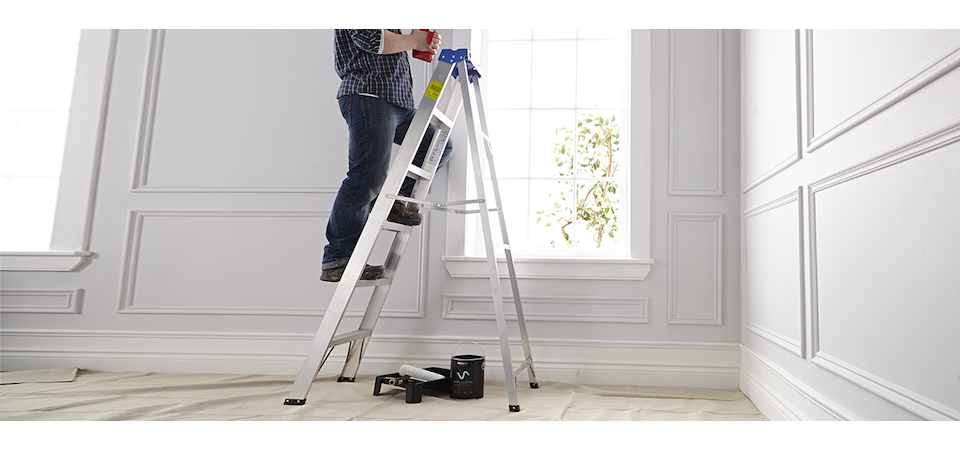
This ladder has legs that pivot or articulate into a variety of positions. Useful for indoor and outdoor projects, such as painting.

How high do you need to climb?
The top two steps of a ladder should not be used, for safety reasons, so do not choose a ladder that is the exact height or slightly lower than you need.
For step ladders, a rule of thumb is to take the desired height you need to reach and subtract 4 ft.
For extension ladders, a rule of thumb is to take the height of the roof line/eaves and add 7’. This will account for overlap within the ladder and allow for enough length to safely get off the top of the ladder

Weight Load
Every ladder comes with a weight capacity and corresponding grade rating. You need to consider not only your weight, but also the additional weight of any tools you may be using while you’re on the ladder.
Weight
| USE | LADDER GRADE | PERSON + MATERIALS |
| Homeowner Light Duty | Grade 3 | 200 lbs. |
| Tradesman Medium Duty | Grade 2 | 225 lbs. |
| Heavy Duty Industrial grade | Grade 1 | 250 lbs. |
| Extra Heavy Duty Industrial grade | Type 1A | 300 lbs. |
Aluminum
An aluminum ladder is suitable in most situations, with one important exception — electrical work should not be done on an aluminum ladder. Use a fiberglass one instead.

Fibreglass
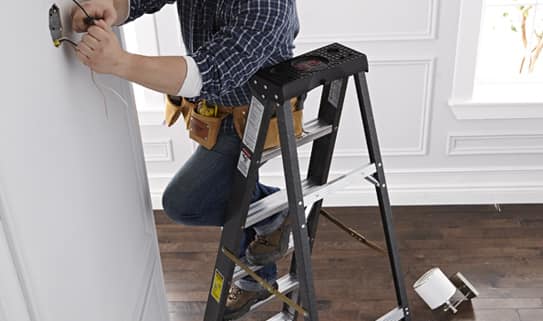
If you will be doing any electrical work on your ladder, you must use a fiberglass ladder rather than an aluminum ladder, to avoid the risk of electrocution.